Every year on World Chimpanzee Day (July 14), we celebrate one of our closest living relatives in the animal kingdom; a species that continues to fascinate scientists and inspire people around the world. While humans and chimpanzees may appear very different at first glance, the truth is that we share an extraordinary connection that goes far beyond appearance.
Humans and chimpanzees share approximately 98–99% of their DNA, making chimpanzees our closest living relatives. This remarkable genetic similarity is reflected in the way we think, communicate, interact, and even express emotions. Studying chimpanzees not only helps us understand their world but also offers valuable insights into our own origins and evolution.
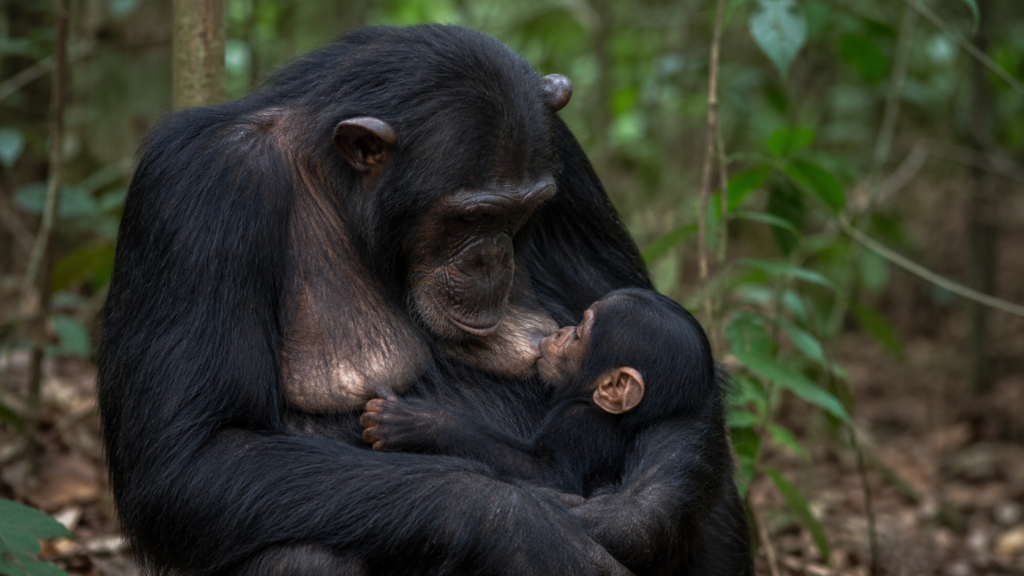
Like humans, chimpanzees live in complex social groups built on relationships, trust, and cooperation. They form lifelong friendships, care deeply for family members, and work together to find food and protect one another. Mothers nurture their young with remarkable patience and affection, carrying infants for years and teaching them the skills they need to survive. Young chimpanzees learn by watching adults, much like human children learn from their parents and communities.
Chimpanzees also experience many of the same emotions we do. They celebrate reunions with embraces and excited vocalizations, comfort distressed companions, grieve the loss of family members, and display curiosity, joy, frustration, and even empathy. Researchers have documented chimpanzees consoling one another after conflicts, sharing food with close companions, and caring for injured group members—behaviors that reflect deep social bonds.
Communication is another striking similarity. Although chimpanzees do not speak languages as humans do, they use a rich combination of vocal calls, facial expressions, body postures, and gestures to communicate. A smile, a hug, an outstretched hand, or a reassuring touch can carry meaning in both chimpanzee and human societies. These sophisticated communication skills allow them to coordinate group activities, resolve conflicts, and strengthen social relationships.
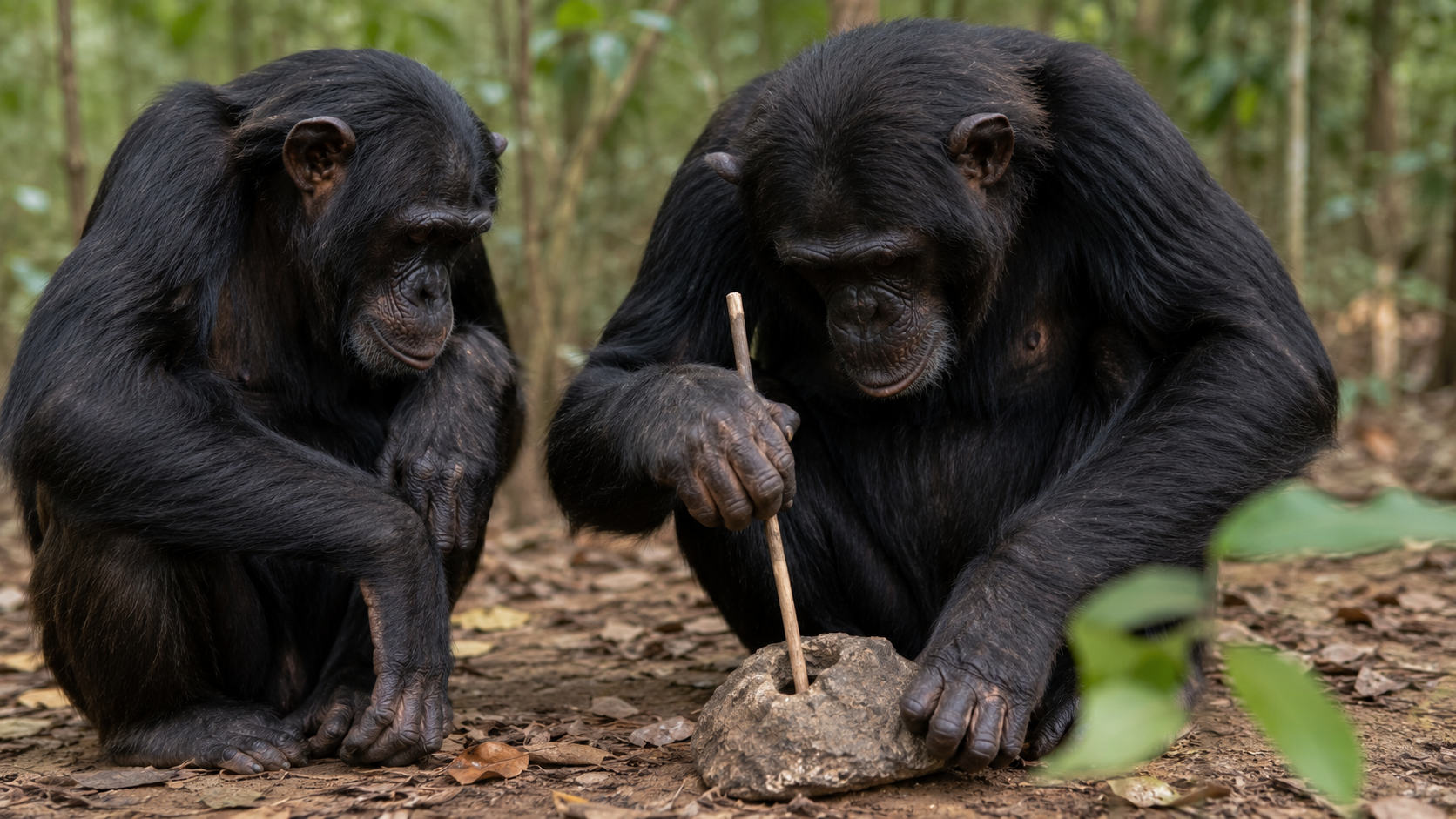
Perhaps one of the most fascinating similarities is their ability to use tools. Chimpanzees fashion sticks to “fish” termites from their nests, use stones to crack open hard nuts, and modify leaves to collect drinking water. These behaviors require planning, problem-solving, and learning from others. Just as humans pass knowledge from one generation to the next, young chimpanzees observe experienced adults and gradually master these important survival skills.
Chimpanzees are also intelligent problem-solvers. They can remember complex information, recognize themselves in mirrors, plan ahead, and adapt to changing environments. Scientific studies have shown that they can solve puzzles, cooperate to achieve shared goals, and make decisions based on past experiences. These abilities demonstrate that intelligence exists along a continuum in nature rather than being unique to humans.
Despite these remarkable similarities, chimpanzees face an uncertain future. Across Africa, their populations continue to decline due to habitat loss, illegal hunting, disease, and the illegal wildlife trade. As forests disappear, chimpanzees lose not only their homes but also the resources they need to survive. Protecting forests means protecting chimpanzees, while also safeguarding clean water, stable climates, and countless other species—including people who depend on healthy ecosystems.
Liberia is fortunate to be home to important populations of the Western Chimpanzee, a subspecies classified as Critically Endangered. The country’s forests provide refuge for these incredible animals, making their conservation a national and global responsibility. By protecting Liberia’s forests and supporting local communities that live alongside wildlife, we help ensure that future generations will continue to share the planet with one of humanity’s closest relatives.
World Chimpanzee Day is more than a celebration of a remarkable species—it is a reminder of our shared history and our shared future. The similarities between humans and chimpanzees challenge us to see them not as distant creatures, but as fellow beings with families, emotions, intelligence, and cultures of their own.
As we celebrate today, let us remember that conserving chimpanzees is ultimately about conserving ourselves. Their survival depends on the choices we make today—to protect forests, promote sustainable livelihoods, combat wildlife crime, and support conservation efforts that benefit both people and nature.
Because when chimpanzees thrive, forests thrive. And when forests thrive, we all do.