As dawn breaks over Liberia’s forests, a chorus of hoots, screams, and rhythmic drumming echoes through the trees. These sounds belong to one of humanity’s closest living relatives—the chimpanzee. Intelligent, social, and remarkably similar to humans, chimpanzees are among the most fascinating animals on Earth. Yet despite their extraordinary abilities, they face an uncertain future as their habitats continue to disappear.
Understanding chimpanzees is not only about appreciating wildlife; it is about recognizing the vital role they play in maintaining healthy forests and safeguarding the ecosystems upon which people also depend.
Intelligent and Highly Social Animals
Chimpanzees share approximately 98.8% of their DNA with humans, making them our closest living relatives alongside bonobos. They live in complex communities that may include 20 to more than 100 individuals, where every member has a role within the group.
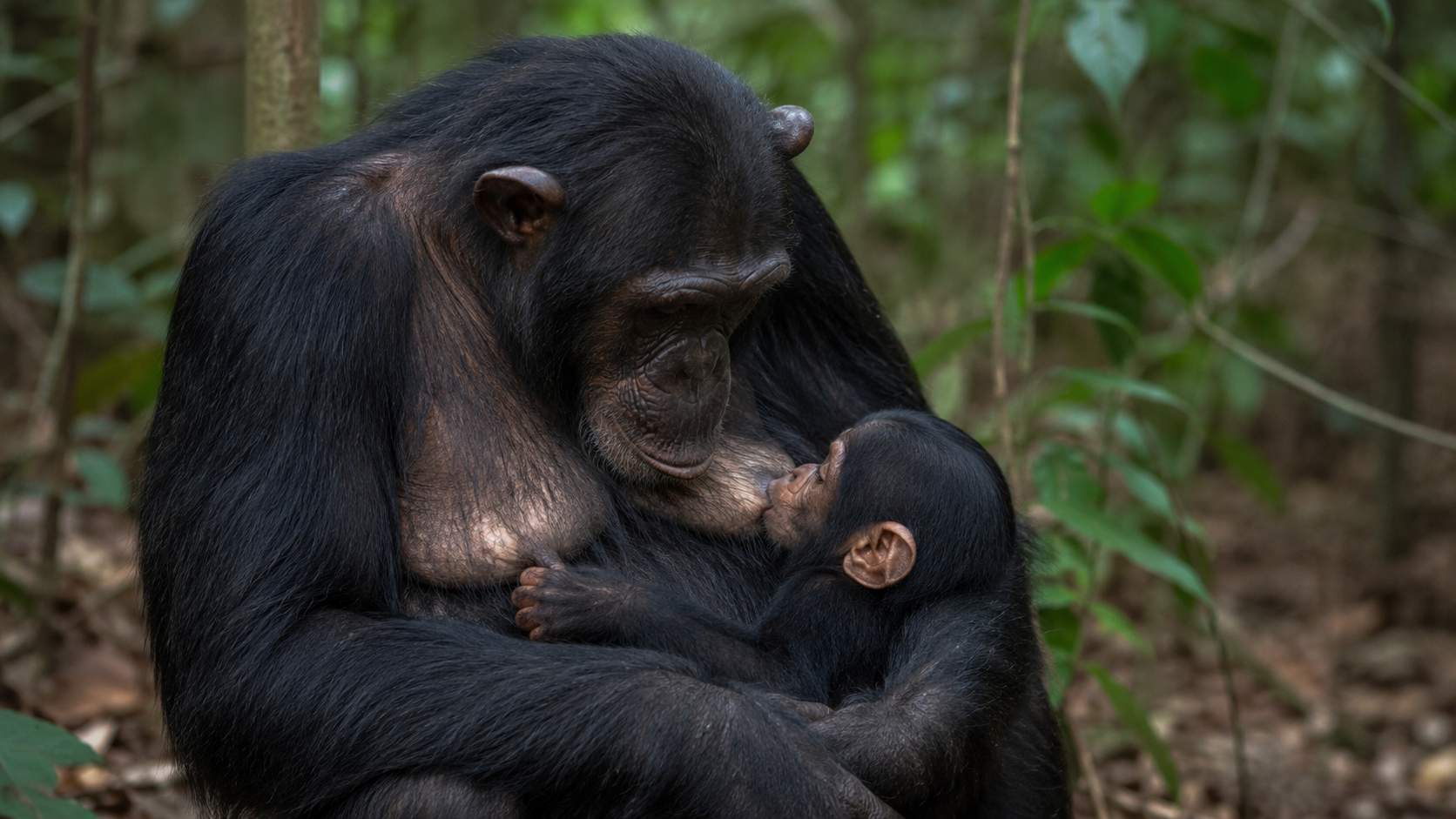
Their societies are built on cooperation, communication, and strong family bonds. Mothers care for their young for up to five years, teaching them essential survival skills such as finding food, building nests, and interacting with other chimpanzees. Young chimpanzees learn through observation, much like human children.
Chimpanzees communicate using a combination of vocal calls, facial expressions, gestures, and body movements. They comfort distressed companions, form lifelong friendships, resolve conflicts, and even mourn the loss of family members.
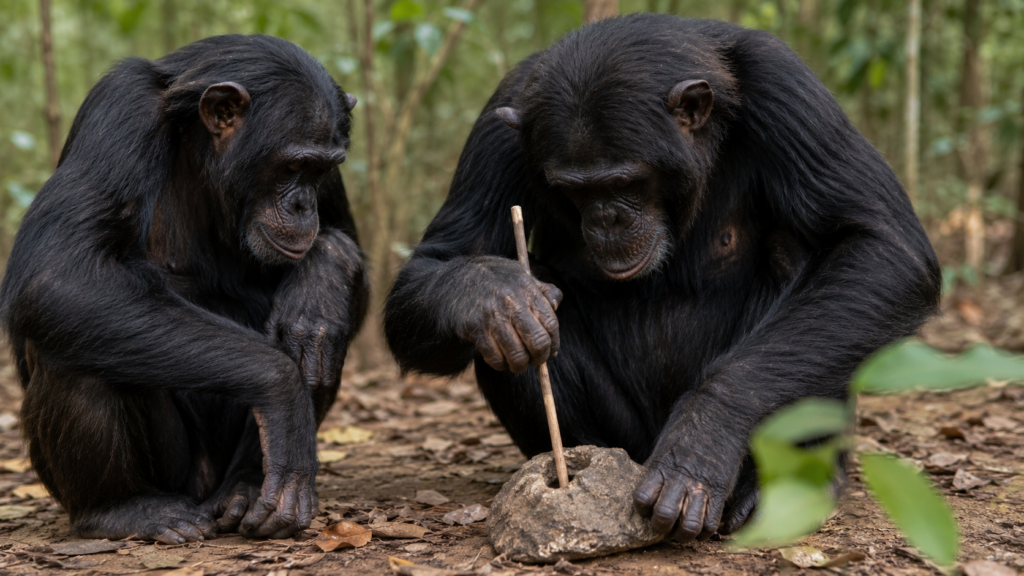
Perhaps most impressively, chimpanzees use tools. They strip leaves from twigs to fish termites from mounds, use stones to crack nuts, and fashion sticks to gather honey. These behaviors demonstrate remarkable intelligence and the ability to pass knowledge from one generation to the next.
The Forest’s Master Gardeners
Chimpanzees are more than charismatic wildlife—they are essential to the health of tropical forests.
As they travel through the forest feeding on fruits, they disperse seeds over long distances through their droppings. Many large tree species depend on animals like chimpanzees for seed dispersal. This natural process helps forests regenerate, increases plant diversity, and supports countless other species.
Healthy forests, in turn, provide clean water, fertile soils, climate regulation, and store enormous amounts of carbon that help combat global climate change.
In many ways, protecting chimpanzees means protecting entire forest ecosystems.
Facing Growing Threats
Despite their ecological importance, chimpanzees are under increasing pressure across Africa.
Their populations are declining because of:
- Habitat loss caused by deforestation, mining, agriculture, and infrastructure development.
- Illegal hunting and the bushmeat trade.
- Human-wildlife conflict as forests shrink and people expand into wildlife habitats.
- Diseases that can spread between humans and chimpanzees due to their close genetic relationship.
These threats have caused chimpanzee populations to decline significantly over recent decades, placing them among Africa’s most vulnerable great apes.
Why Chimpanzee Conservation Matters
Conserving chimpanzees delivers benefits far beyond protecting a single species.
When chimpanzee habitats are conserved:
- Forest biodiversity is protected.
- Watersheds remain healthy.
- Carbon-rich forests continue storing greenhouse gases.
- Local communities benefit from ecosystem services such as clean water and sustainable livelihoods.
- Future generations inherit healthy natural landscapes.
Chimpanzees also serve as an umbrella species. Protecting the forests they need automatically protects thousands of other plants and animals that share the same habitat.
Liberia: A Stronghold for Chimpanzees
Liberia contains some of the largest remaining blocks of the Upper Guinean Forest, one of the world’s biodiversity hotspots. These forests provide critical habitat for the Western chimpanzee, a subspecies that has experienced dramatic population declines across West Africa.
Protected areas, community forests, and conservation partnerships are helping safeguard these important habitats. However, long-term success depends on continued collaboration among government institutions, conservation organizations, local communities, and development partners.
Communities living alongside forests play a particularly important role. Their traditional knowledge, stewardship, and commitment to sustainable natural resource management are essential for ensuring chimpanzees continue to thrive.
Everyone Has a Role to Play
Protecting chimpanzees is a shared responsibility. Individuals can contribute by supporting forest conservation initiatives, discouraging illegal wildlife trade, promoting sustainable land-use practices, and raising awareness about the importance of biodiversity.
Every protected forest, every restored habitat, and every informed community brings us one step closer to securing a future where both people and chimpanzees can flourish together.
Looking Ahead
Chimpanzees remind us that humans are deeply connected to nature. Their intelligence, emotions, and complex societies reflect our shared evolutionary history, while their survival reflects the health of the forests we all depend upon.
By protecting chimpanzees, we are investing in resilient ecosystems, stronger communities, and a healthier planet. Their future—and ours—depends on the choices we make today.
Together, we can ensure that the voices of chimpanzees continue to echo through Liberia’s forests for generations to come.