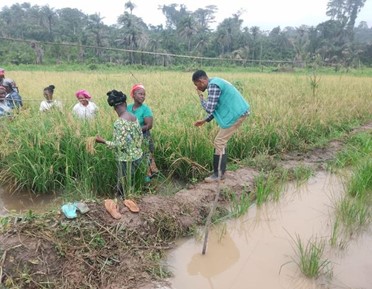
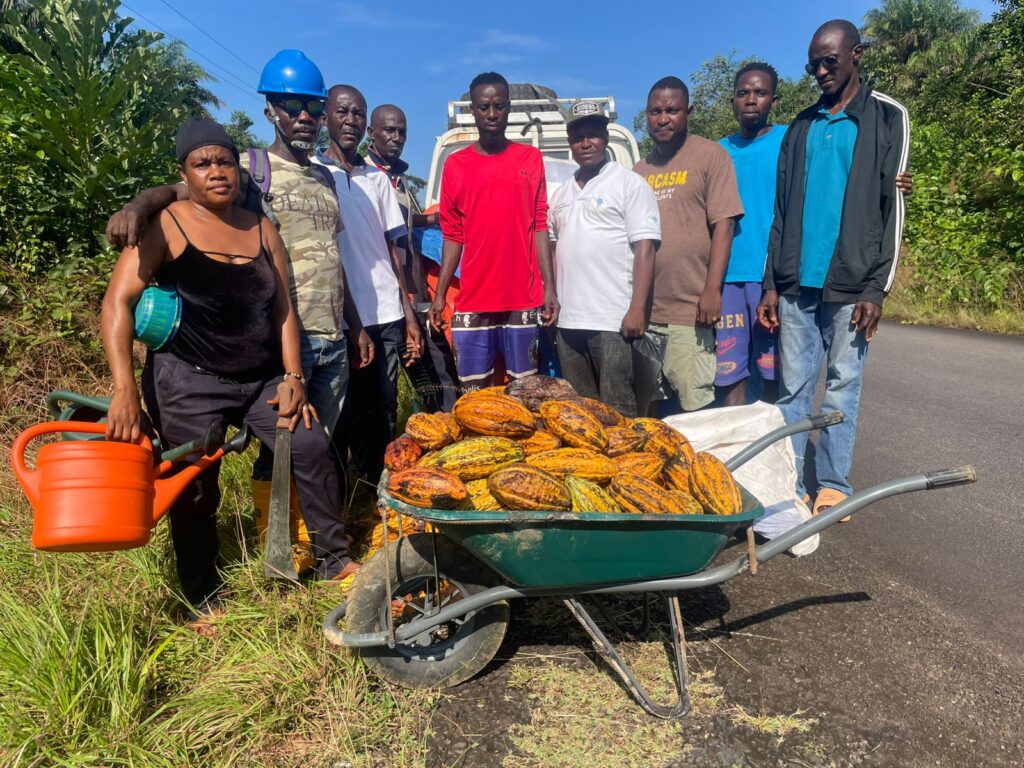
In November 2025, the Society for the Conservation of Nature of Liberia (SCNL), with support from CI-GEF, embarked on a two-week mission across the northwest landscape. The goal was ambitious yet deeply human: to deliver thousands of cocoa pods, train hundreds of beneficiaries, strengthen women’s participation in agriculture, and set in motion the establishment of 145 acres of organic shaded cocoa farms across 29 project sites.
What unfolded was a journey filled with resilience, learning, and community spirit—woven through three counties, twenty-seven communities, and two universities.
A Journey Rooted in Hope
The mission began with the collection of 3,770 cocoa pods from Saclepea, Nimba County. These pods would soon become nurseries that symbolize hope for families across Lofa, Gbarpolu, and Grand Cape Mount Counties.
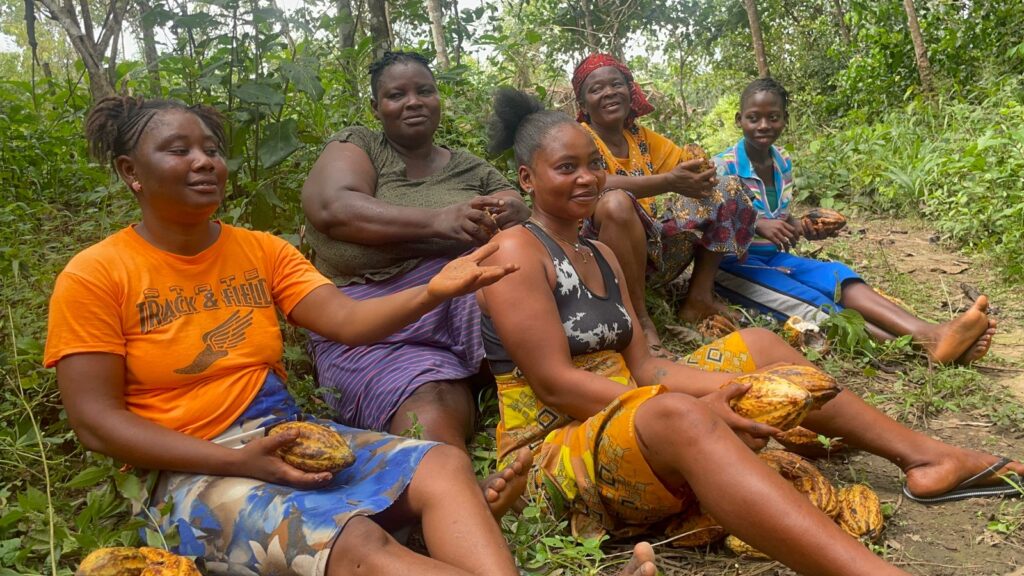
But the mission carried something even more valuable: a chance for ordinary Liberians—especially women—to gain skills, confidence, and ownership of a new livelihood path.
With 53% women and 47% men, the FOLUR Project is intentionally shifting the balance of opportunity. Across all communities visited, women stepped forward as learners, leaders, and future cocoa farmers.
Lofa County – Where Youth and Tradition Meet
In Lofa County, the team delivered pods to 20 agriculture students at the University of Lofa and 20 community farmers in Folima. The atmosphere was marked by curiosity and enthusiasm.
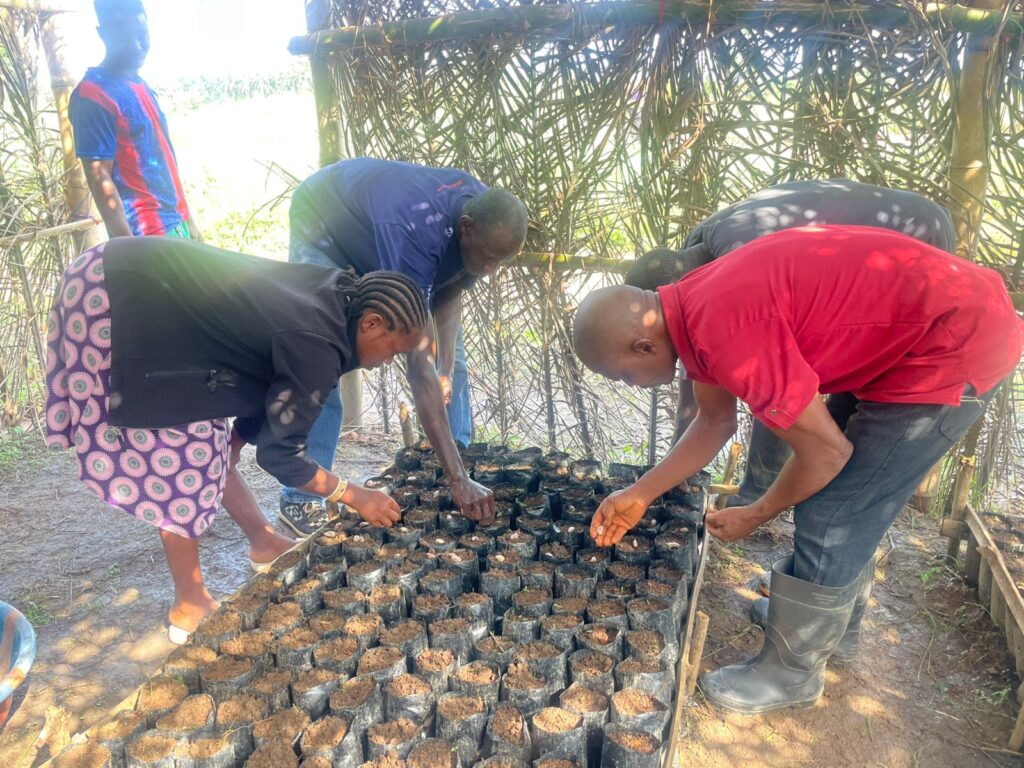
Under the guidance of SCNL’s Livelihood Officer, Matthew Williams, beneficiaries learned how to burst cocoa pods, extract beans, and sow both fresh and pre-germinated seeds. A young woman at the university confidently demonstrated her new skills, proudly declaring her readiness to establish her own cocoa nursery.
Her excitement reflected the energy of Lofa’s youth—standing at the intersection of traditional farming and modern agricultural knowledge.
Grand Cape Mount County – Twenty Communities, One Vision
From Lofa, the mission moved into Grand Cape Mount County, home to the largest group of beneficiaries: 100+ farmers across 20 communities including Weilor, Vaamah, Makandor, Sanjamana, Gbonjeima, Mambo, Falie Town, Damballa, Bendaja, Karnga, Gohn II, and more.
At each stop, nurseries were neatly prepared, polythene bags filled with soil, and communities ready for action.
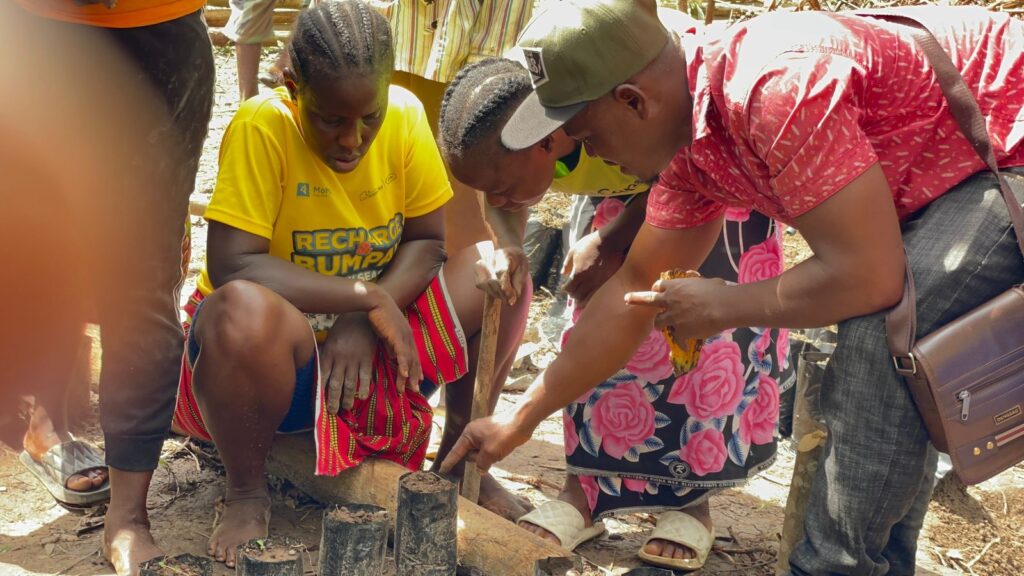
Women, in particular, played a commanding role. In Weilor, Gbonjeima, Damballa, and Mambo, women stepped forward with confidence—sowing beans during practical sessions, asking questions, and expressing genuine appreciation for the opportunity.
In Falie Town, where the nursery was not yet complete, the SCNL team stayed an extra day, working hand-in-hand with the community until the structure was ready. What emerged was not just a nursery, but a symbol of determination and partnership.
At Straz Sinje, twenty agriculture students from the University of Liberia embraced the training with optimism—highlighting the project’s impact on Liberia’s academic institutions.
Gbarpolu County – A Tapestry of Resilient Communities
The mission concluded in Gbarpolu County, where 40 beneficiaries from Farwenta, Guyan Town, Gbarquoi, Totoquelleh, Lowomah, and Sappimah engaged in hands-on training.
Women, once again, stood prominently at the front.
A woman from Farwenta said, after sowing her first pre-germinated bean:
“I never imagined I could be part of cocoa farming. Today, I know every step.”
Her words captured the essence of the project: empowerment that lasts long after the team departs.
Beyond Cocoa: Planting Dignity, Strengthening Communities
The FOLUR Project is more than an agricultural intervention. It is a platform for rural empowerment, gender inclusion, and the revitalization of community-based farming systems.
Through training, tool support, and knowledge transfer, communities are now equipped to cultivate sustainable cocoa farms—farms that will provide income, stability, and environmental restoration for years to come.
As the SCNL team completed its journey on November 28, 2025, one truth became clear:
The seeds planted today are shaping a stronger tomorrow for Liberia’s northwest landscape.